
This article clearly explains what the tax value of a share is, how it is determined for non-listed Swiss stock corporations and why it is tax-relevant for shareholders. It outlines the role of cantonal tax authorities, the valuation methods applied and how companies can communicate the tax value to shareholders in a transparent and efficient manner.
Introduction
Anyone holding shares in a non-listed Swiss stock corporation will sooner or later come across the term “tax value of a share”. But what does it actually mean? And why should not only boards of directors, but also shareholders, pay attention to this value? This article provides an overview of how the tax value of shares is determined, why it matters and how it is applied in practice.
Table of contents
- What is the tax value of a share?
- How is the tax value of a share calculated?
- Why is the tax value relevant for shareholders?
- What if no tax value has yet been determined?
What is the tax value of a share?
The tax value of a share is the value determined by the tax authorities and used as the basis for the wealth tax of shareholders. Unlike listed companies, whose shares have an observable market price, privately held companies lack such a reference. For this reason, the cantonal tax authority responsible for assessing the company determines the taxable fair market value of the share based on the annual financial statements.
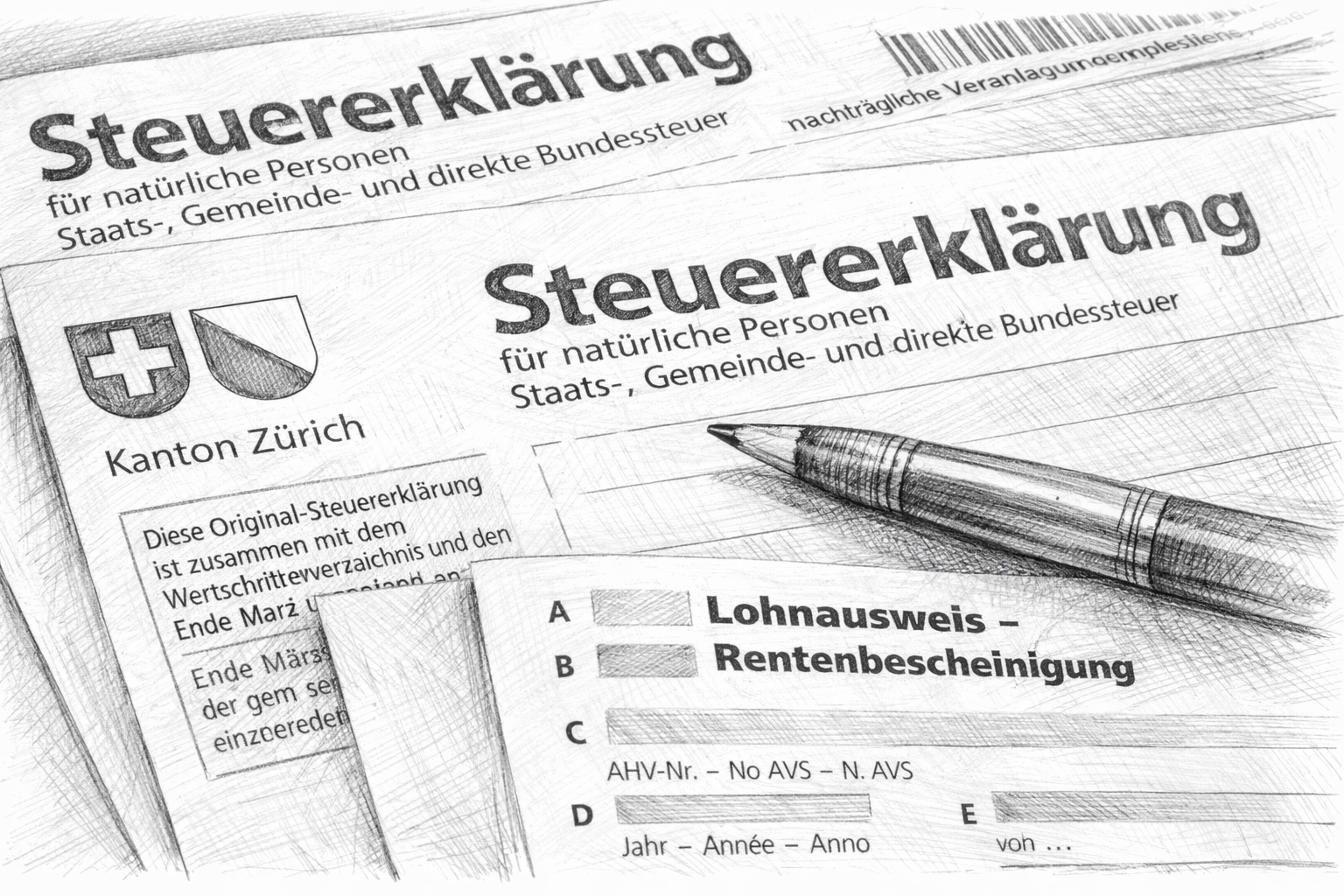
The determined tax value is communicated to the board of directors as part of the tax assessment decision and subsequently serves as the binding reference for shareholders when declaring their shares in their personal tax returns.
How is the tax value of a share calculated?
As a rule, the tax value is calculated using the so-called practitioners’ method. This method combines two key components.
The substance value reflects the adjusted equity according to the financial statements, where applicable restated to market values, including hidden reserves.
The earnings value represents the capitalised value of average adjusted net profits, using a capitalisation rate determined annually by the Swiss Federal Tax Administration (2024: 8.75%).
The overall company value is derived from the weighted average of these two components, with a weighting ratio of 1:2 in favour of the earnings value. The resulting value is then divided by the number of issued shares.
While minor differences may exist at cantonal level, most tax authorities follow this nationally harmonised methodology as set out in Circular No. 28 of the Swiss Tax Conference.
Why is the tax value relevant for shareholders?
The tax value of a share is relevant for shareholders for several reasons. It forms the basis for wealth tax in the personal tax return. It ensures transparency by providing a uniform and authoritative value. It offers planning certainty, for example in the context of gifts or inheritance planning.
What if no tax value has yet been determined?
Especially in the case of newly incorporated companies or before the first official tax assessment, the question arises as to which value should be declared in the tax return. In such cases, it is advisable for the company to calculate a provisional fair market value based on the practitioners’ method and to communicate this value to its shareholders. This provisional value serves as a reference until the official tax assessment is issued.
The calculated value should be properly documented and comprehensible. An adjustment may be required once the cantonal tax authority issues its formal assessment.
Tip: stock corporations can share the official tax value with all shareholders via Konsento in just a few clicks. This saves time and provides clarity for individual tax returns.
Sharing the tax value efficiently with shareholders using Konsento
Companies using Konsento can generate tax certificates directly from their digital share register. In just a few clicks, the relevant tax value can be shared with all shareholders in a legally compliant manner, either as a PDF or digitally. This ensures that all shareholders receive the tax value in good time and that no essential information is missing from the tax certificate. All shareholder communication is centrally stored and fully traceable.
Conclusion
The tax value of a share is more than just a number. It directly affects the tax burden of shareholders and is an integral part of the legal reality of non-listed Swiss stock corporations. A sound understanding of the underlying principles and correct implementation ensures transparency and legal certainty for all parties involved.
Try Konsento for free now and share the tax value of your company’s shares easily and securely with all shareholders – in just a few clicks. Register now at www.konsento.ch