
AirVault webflow template image

Report to the transparency register – who bears responsibility and what a request from the authorities means
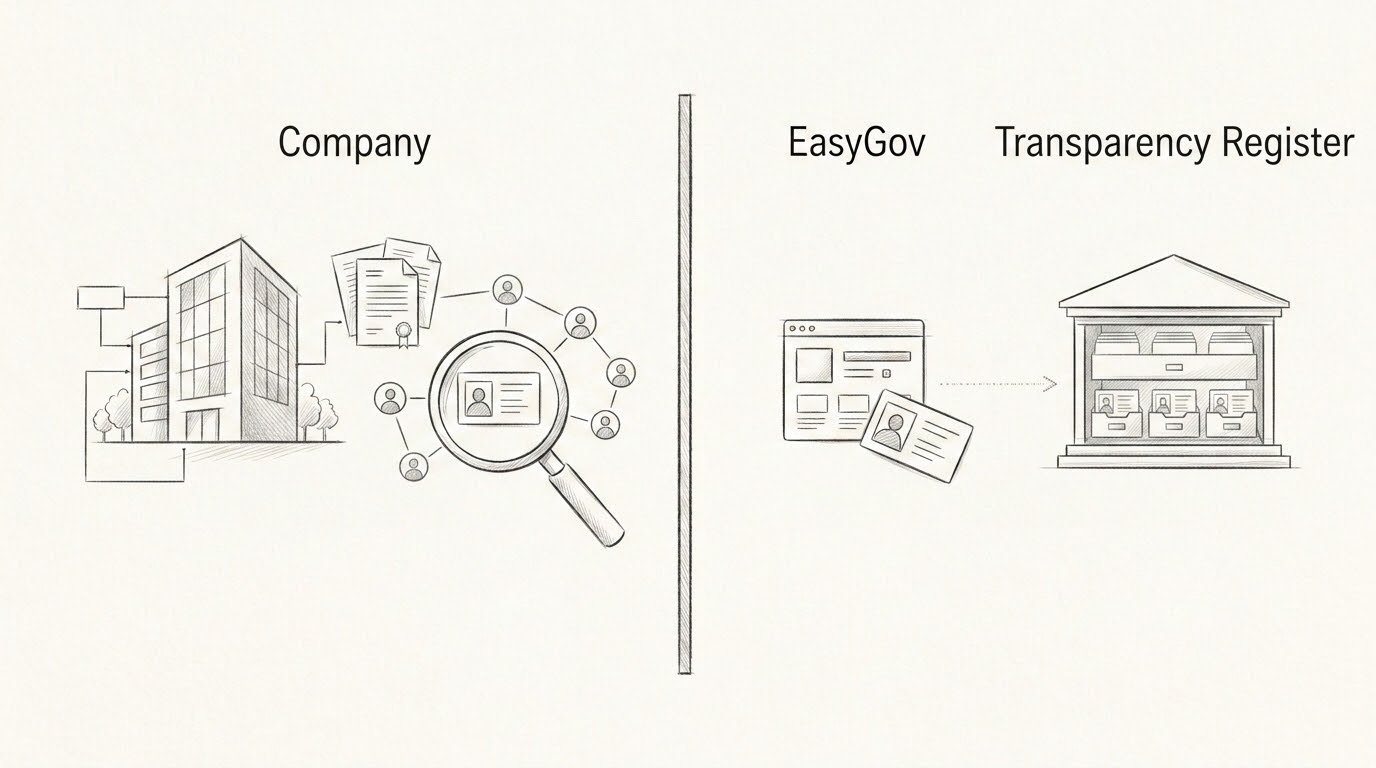
Are companies requested to report to the transparency register? We explain when a request is issued, what it costs and what happens if a deadline is missed.
AirVault webflow template image

Reporting to the transparency register – what the electronic platform handles and what the company itself must do
What EasyGov and the transparency register do, where their role ends, and what preparatory work the company must carry out before submitting a report.
AirVault webflow template image

Transparency Register: Relief or Additional Burden for Banks?

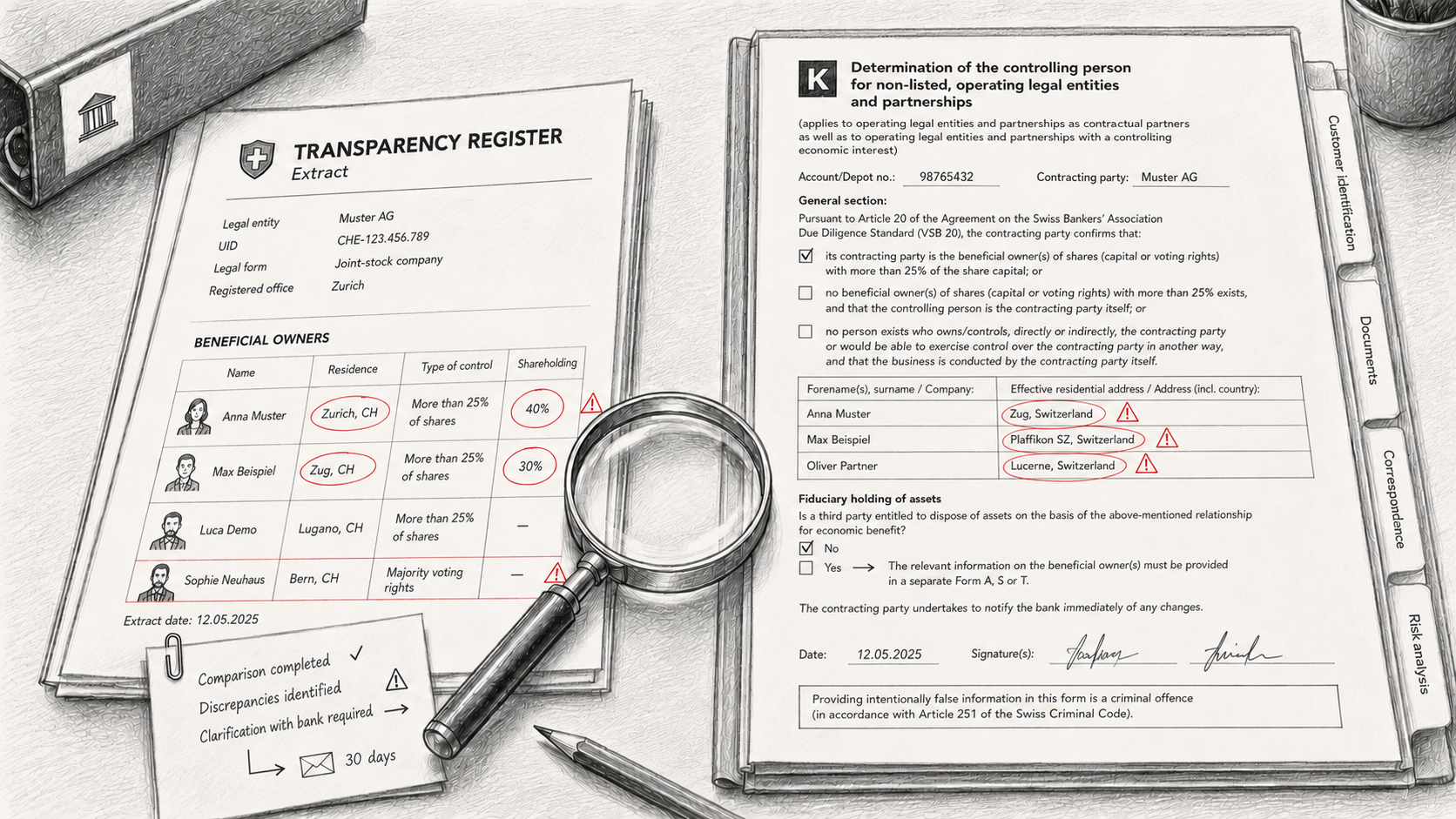
Who has access to the Swiss Transparency Register and what applies in the event of discrepancies? Procedure, deadlines and exceptions for financial intermediaries under Art. 27 and 30 LETA explained.
AirVault webflow template image

The Final Transparency Ordinance Enters into Force on 1 October 2026: What Has Changed Compared to the Draft

The Transparency Ordinance (LETO) enters into force on 1 October 2026. What has changed compared to the consultation draft and what this means for Swiss companies.
AirVault webflow template image

Who May Access the Transparency Register – and Why?

Who has access to the Transparency Register? This article explains which authorities and financial intermediaries may view data and are required to report discrepancies.
AirVault webflow template image

Transparency Act: Paper Tiger or Real Control System?

Is the Swiss Transparency Act a paper tiger? Learn how authorities monitor filings to the transparency register and what consequences incorrect entries entail.
AirVault webflow template image

What Information Must Be Reported to the Transparency Register

What must be reported to Switzerland's Transparency Register? Identity data, nature and extent of control, thresholds, control chains and deadlines under the LETA and LETO — explained in plain language.
AirVault webflow template image

Transparency Act and Transparency Register: What Swiss SMEs Need to Know

Switzerland’s Transparency Act (TJPG) requires companies to register their beneficial owners in a Transparency Register. Learn who is affected and how digital tools like Konsento make compliance easier.
AirVault webflow template image

Which Legal Entities Are Subject to Reporting Obligations under the Legal Entity Transparency Act (LETA)?

From 2026, LETA will require around 600,000 legal entities to report their beneficial owners. Learn which legal forms are covered, which exceptions apply, and how to prepare your organisation using Konsento’s tools.
•
FAQ

Frequently asked questions

Who within the company is responsible for determining beneficial ownership and carrying out the verification with the required due care?

The most senior member of the governing body. That person may delegate the task but remains responsible for the proper filing of the report (Art. 12 LETA).

What happens if a shareholder does not cooperate in determining the beneficial ownership?

The company documents the steps it has taken (Art. 8 para. 2 LETA) and states in the report that the verification was unsuccessful (Art. 9 para. 3 LETA, Art. 21 LETO). An intentional breach of the cooperation and reporting obligations may result in a fine of up to CHF 500,000 for the shareholder concerned (Art. 43 let. a LETA).

Is a copy of an identity document always required?

The company must establish whether the person concerned has an OASI number. Only if that is not the case must it obtain a copy of the passport, identity card or foreign national identity card (Art. 10 para. 2 LETO).

Get Started Today and Streamline Your Workflow

Join thousands of satisfied users who have transformed their workflow with AirNode. Sign up now and take the first step towards.

By clicking Sign Up you're confirming that you agree with our Terms and Conditions.
Thank you! Your submission has been received!
Oops! Something went wrong while submitting the form.